Multicultural weddings
Indian destination weddings: a guest's guide to every event
Somewhere in your invitation are five events, three days, and at least two words you’ve never seen before. That’s not a scheduling error - it’s the whole point. An Indian wedding isn’t a ceremony with a party attached; it’s a festival with a marriage in the middle, and as a guest you’re not attending it so much as joining it.
Here’s each event from the guest’s side: what’s actually happening, what’s expected of you, and what to wear and bring. One honest note before we start: traditions vary enormously by region, religion and family - this guide follows the multi-day Hindu template most destination weddings use. When your invitation differs, the invitation wins. When in doubt, ask the couple - the questions are expected.
The shape of the weekend
Most three-day versions run like this: a daytime Mehndi and Haldi (often back to back), the Sangeet that night, then the big day - the groom’s Baraat arrival, the ceremony at the mandap, and the reception in the evening - with a farewell brunch to send everyone home. Some families combine events; some add regional ones. Every event has its own dress code, venue and start time, which is why the itinerary deserves a careful read.
Mehndi - the henna afternoon
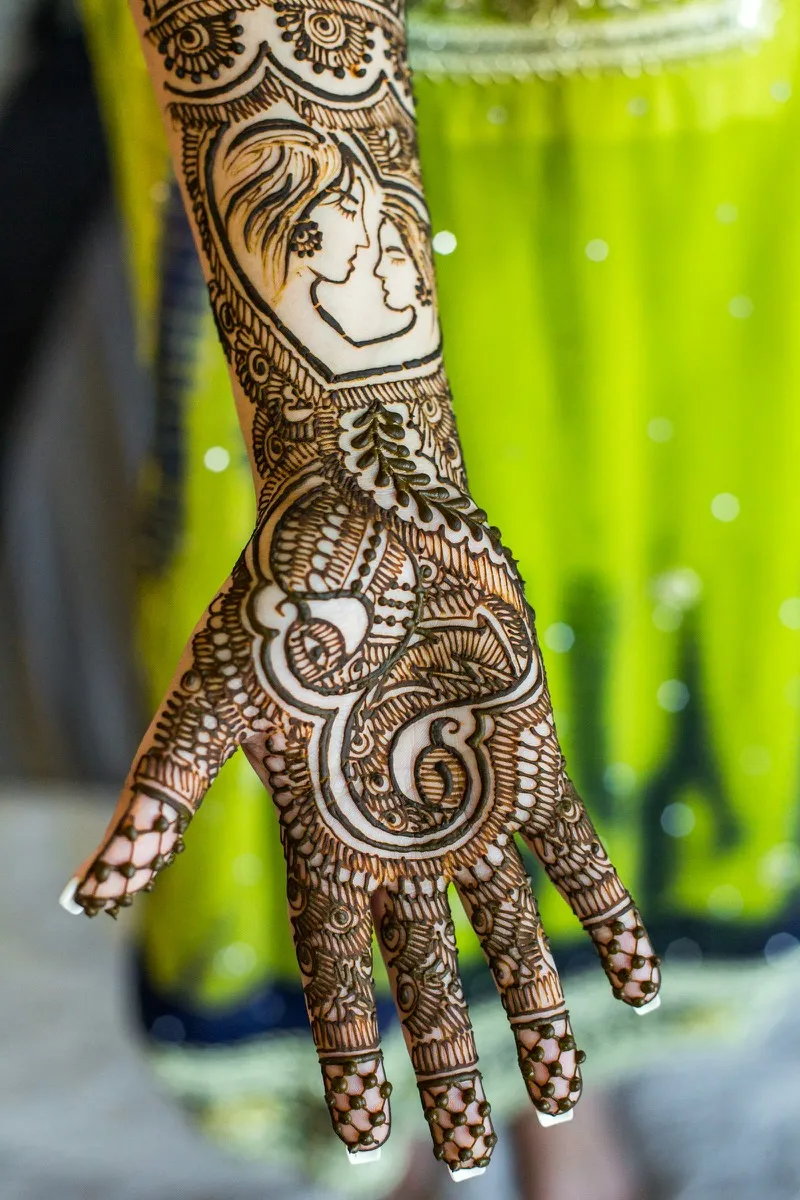
What’s happening: henna artists work delicate patterns onto the bride’s hands and feet - hers take hours - while music plays and everyone else drifts between snacks, chai and conversation. It’s the softest landing of the weekend: daytime, relaxed, unhurried.
As a guest: you can usually get henna too - a small motif takes minutes, and yes, it’s offered to men at plenty of weddings. It needs 30-60 minutes to dry, so time it before you eat, not before.
Wear and bring: bright daytime colours, sleeves that push up easily, and nothing you’d mourn a henna stain on. Flats - there’s often floor seating.
Haldi - the turmeric blessing
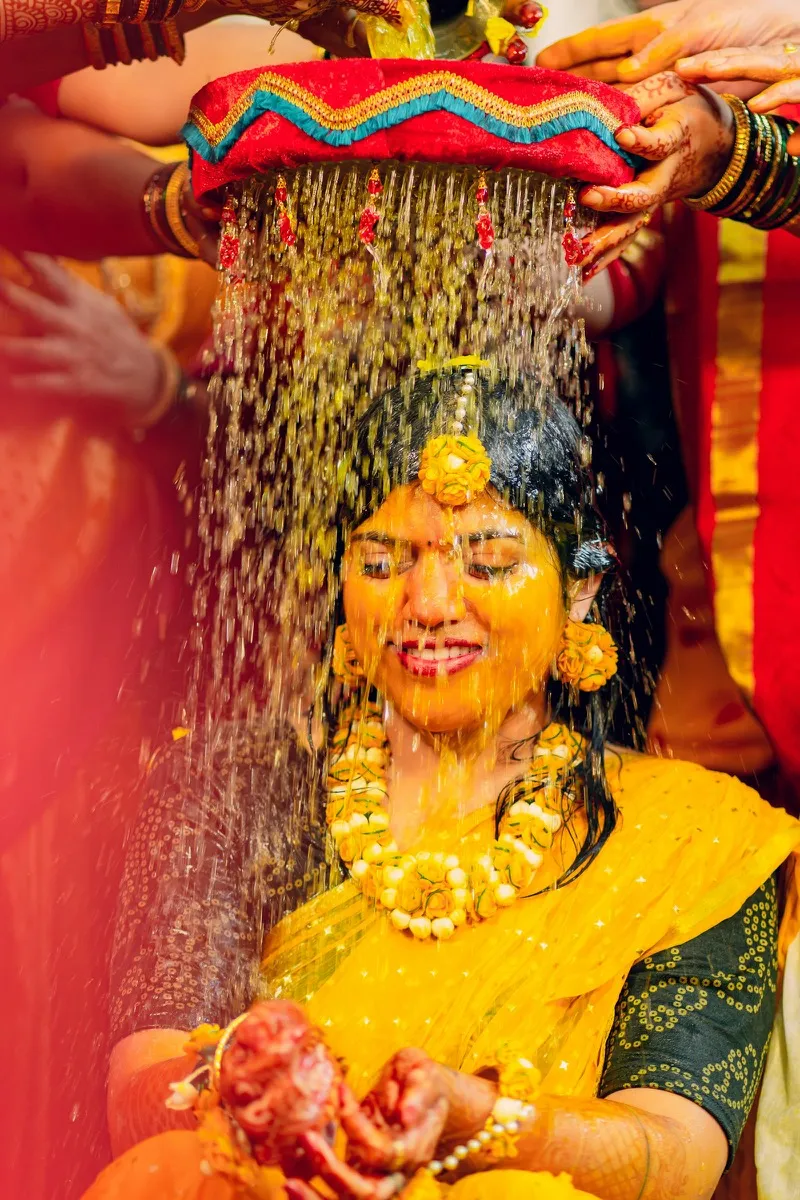
What’s happening: family and friends take turns dabbing a turmeric paste onto the couple - a blessing for glow and good luck - and it escalates joyfully from dabbing to smearing to, at some weddings, an all-out turmeric-and-petals water fight.
As a guest: you may be invited to apply a little haldi to the couple. Do it - it’s an honour, not an imposition. Keep your phone at a safe distance from the splash zone.
Wear and bring: yellow is the traditional colour for the day, and whatever you wear should be washable. This is not the event for your best outfit - that’s precisely why it’s so much fun.
Sangeet - the music night
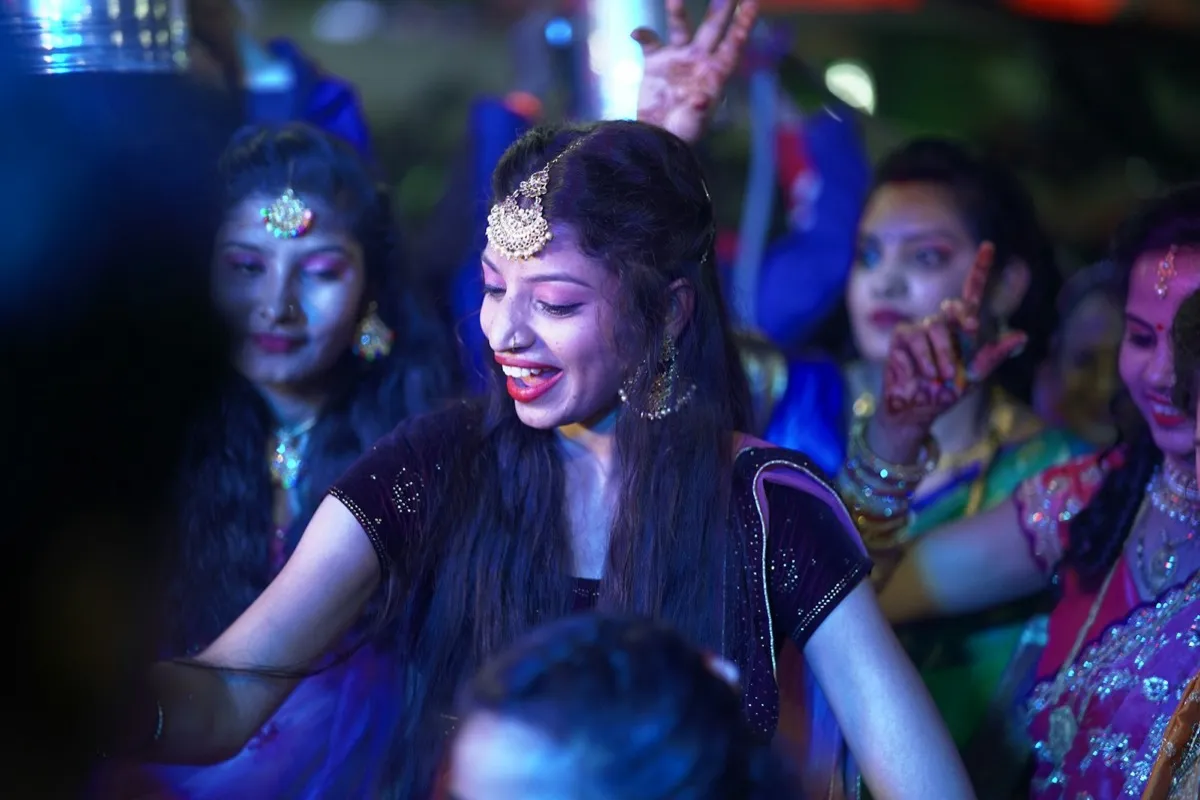
What’s happening: the party night. Families perform rehearsed dances - often with affectionate roasting of the couple built in - and then the floor opens to everyone. Expect a grandparent to steal the show.
As a guest: nobody will make you perform; everybody will hope you dance. Enthusiasm beats technique by a mile. We’ve written a full guest guide to the Sangeet if this is your first.
Wear and bring: your brightest, most movable outfit and shoes you can dance in for hours. Some venues go shoeless - painted toenails optional, comfortable feet mandatory.
Baraat - the groom’s arrival
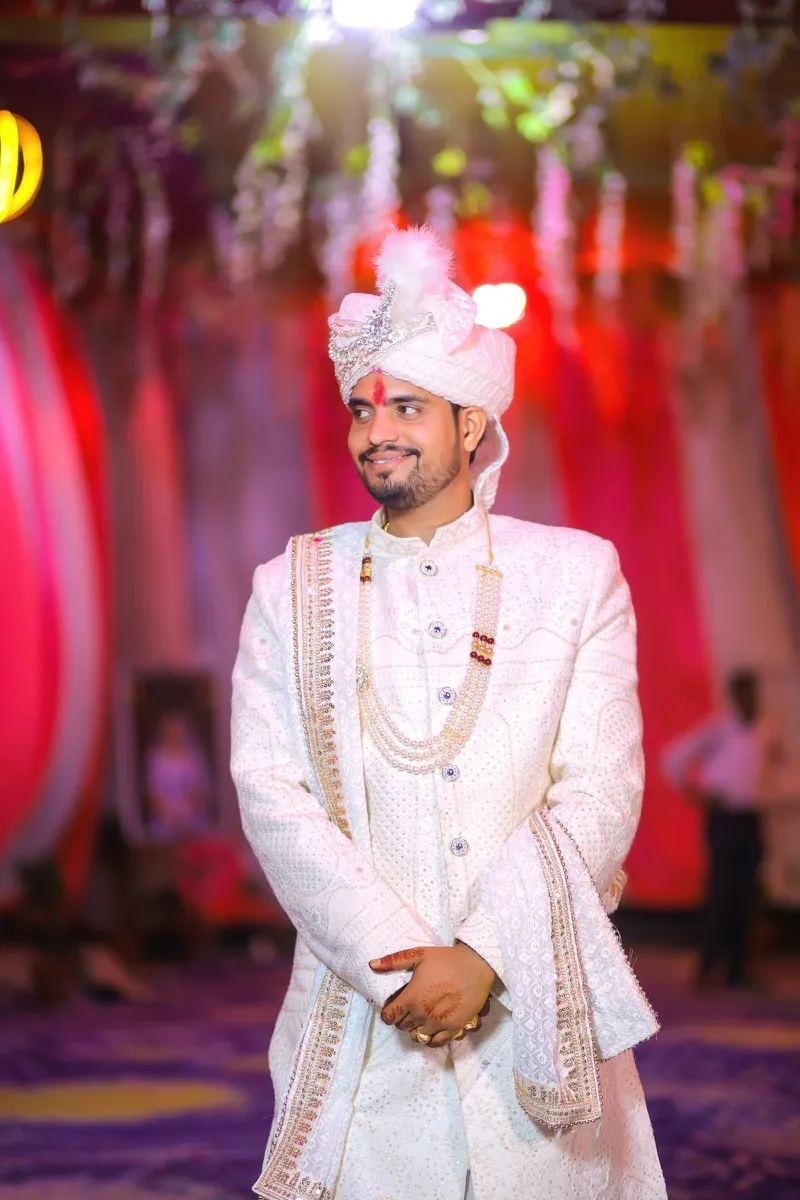
What’s happening: the groom arrives in procession - traditionally on a white horse, always with drummers - surrounded by his side dancing at full volume. At the gate, the bride’s family receives him with garlands and ceremony, and the two sides formally meet.
As a guest: if you’re on the groom’s side, you’re in the Baraat - dance, even badly, especially badly. If you’re on the bride’s side, you’re the welcome party. Either way it’s loud, brilliant and unmissable - do not sleep in.
Wear and bring: you’ll be outdoors and moving. Sunglasses, sunscreen, and nothing that can’t handle twenty minutes of dancing on a driveway.
The ceremony - pheras at the mandap
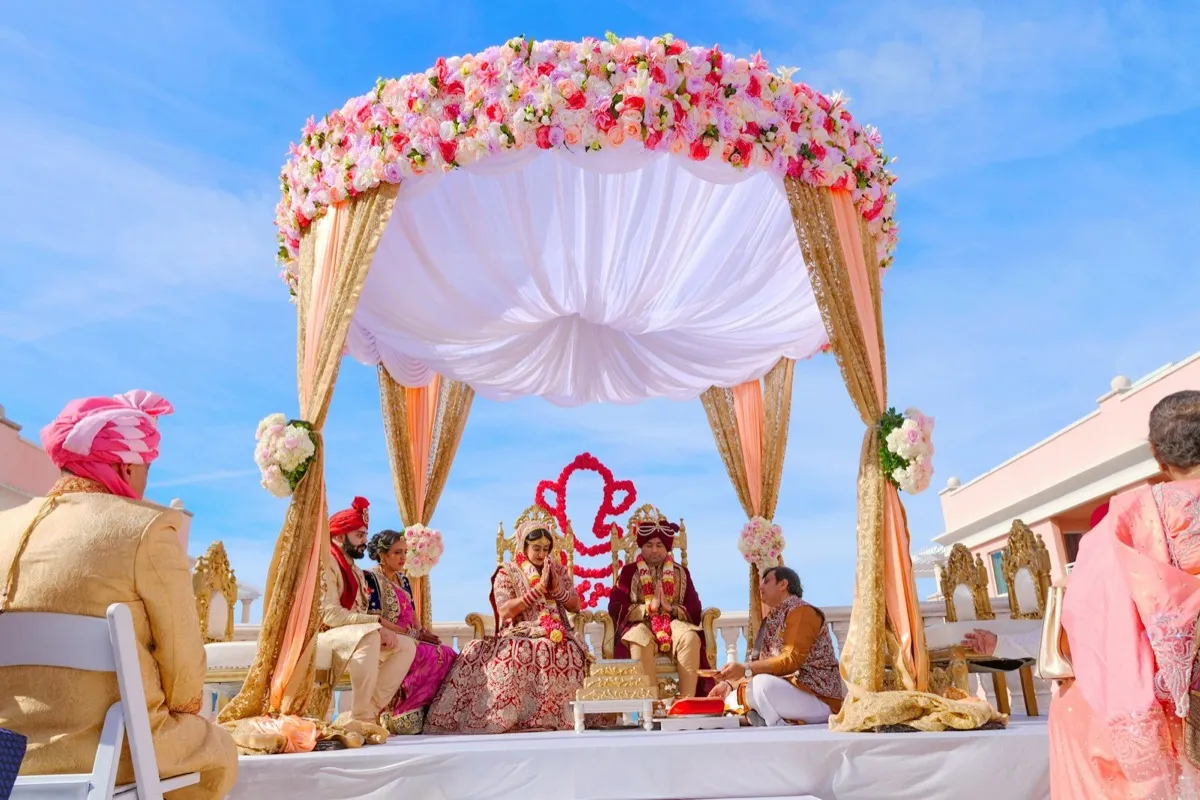
What’s happening: under a four-pillared canopy - the mandap - the couple make their vows around a sacred fire, circling it (the pheras) while a priest recites blessings. This is the sacrament itself, and its start time follows the muhurat, an auspicious moment fixed in advance: the one timing all weekend that will not drift. Don’t gamble on being fashionably late.
As a guest: ceremonies can run one to three hours, often in the morning. Guests chat quietly, drift for chai and return - at most weddings that’s normal, not rude. Shoes come off near the mandap at many venues; ask before photographing the rituals up close.
Wear and bring: bright and slightly modest - a shawl or dupatta is useful cover for shoulders. Slip-off shoes earn their keep here.
The reception - the send-off in style
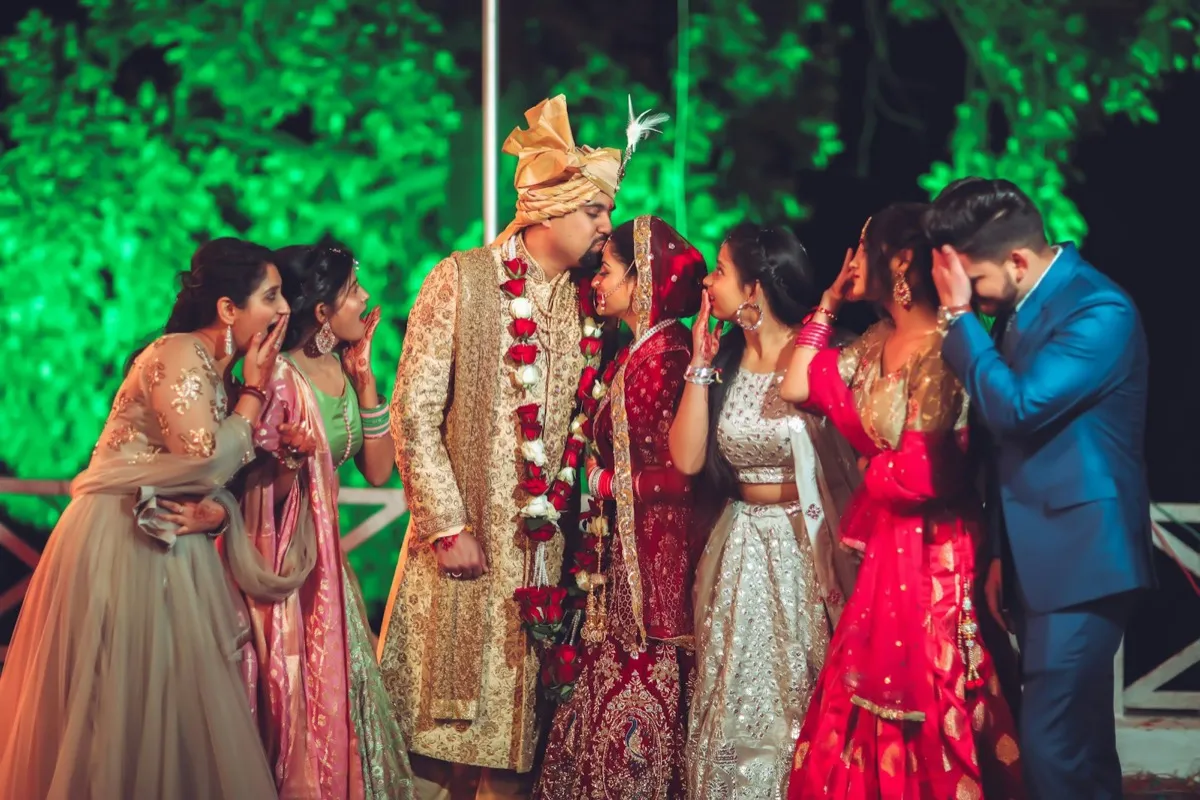
What’s happening: the formality-free finale: entrances, speeches, dinner served late, and a dance floor that outlasts everyone. The couple finally exhale - this is when you’ll actually get to talk to them.
As a guest: this is the event for gifts. Cash in an envelope (shagun) is traditional - amounts ending in a one, like £51, carry the luck - and a boxed gift is just as welcome. There’s usually a card box or a designated cousin; when in doubt, ask.
Wear and bring: your strongest outfit of the weekend. You’ll be photographed more than you expect - our guide to posing in wedding photos exists for exactly this night.
What to pack
- One bright outfit per event - colour over formality; Indian wear welcome everywhere, required nowhere
- Two kinds of shoes - dancing shoes, and ones that slip off easily
- A shawl or scarf - modesty at the ceremony, warmth at desert-night venues
- Sunscreen and sunglasses - the Baraat and Haldi are daytime and outdoors
- Cash and envelopes - for shagun; get crisp notes before you fly
- The unglamorous kit - stomach settlers, rehydration salts, plasters, a power adapter. The guest who packed them is everyone’s hero by day two.
Etiquette, quickfire
- Timing: most events start later than printed - the ceremony’s muhurat is the exception. When the itinerary says the pheras begin at 9:40, be seated at 9:40.
- Photography: shoot the dance floor freely; ask before shooting rituals.
- Alcohol: varies by family and event - some are dry, some flow. Follow the room.
- Food: usually abundant, often vegetarian at ceremony events, always worth pacing yourself. Eating well is a compliment to your hosts.
- Joining in: every ritual you’re beckoned into - haldi dabbing, dancing, garland-holding - is an invitation, not a test. Say yes.
The couple chose to bring you across the world for this. Wear the colour, join the dancing, ask the questions - being delighted by it all is the most respectful thing a guest can do.
Quick answers
How many outfits do I need for an Indian wedding?
One per event on your invitation - typically three to five across a weekend. Bright colour matters more than formality; daytime events can repeat pieces, and the ceremony and reception get your strongest looks. Indian wear is welcome at every event but never required.
What should I wear to an Indian wedding as a guest?
Bright, festive colours - they honour the occasion. Avoid black and plain white, which read as sombre, and avoid the bride's colour if it's known (usually red). Bring shoes you can dance in, and ones that slip off easily for any temple or mandap moments.
How much money should I give at an Indian wedding?
There's no fixed rule. Cash in an envelope - shagun - is traditional, and amounts often end in a one (£51, ₹501): the extra one symbolises continuity and good luck. Give roughly what a generous dinner costs in your circle; a boxed gift is equally welcome.
How long do Indian weddings last?
Destination weddings usually run two to three days with four to six events. The ceremony itself can take one to three hours, and its start time follows the muhurat - an auspicious time chosen in advance - which is the one timing of the weekend that will not drift.